
Types of laboratories
Laboratories are extremely important: for research, for the production of goods and for people in their everyday lives. The Geniu Institute estimates that there are over 500,000 analytical laboratories worldwide. Geniu employees know laboratories better than anyone else. They have worked in hundreds of laboratories of all kinds – for example as laboratory managers and consultants. Based on this knowledge, Geniu has developed a “typology of laboratories” that is helpful for both practitioners and researchers.
BACKGROUND ON LABORATORIES
A laboratory or laboratory is often understood to be a room in which analytical procedures are used.
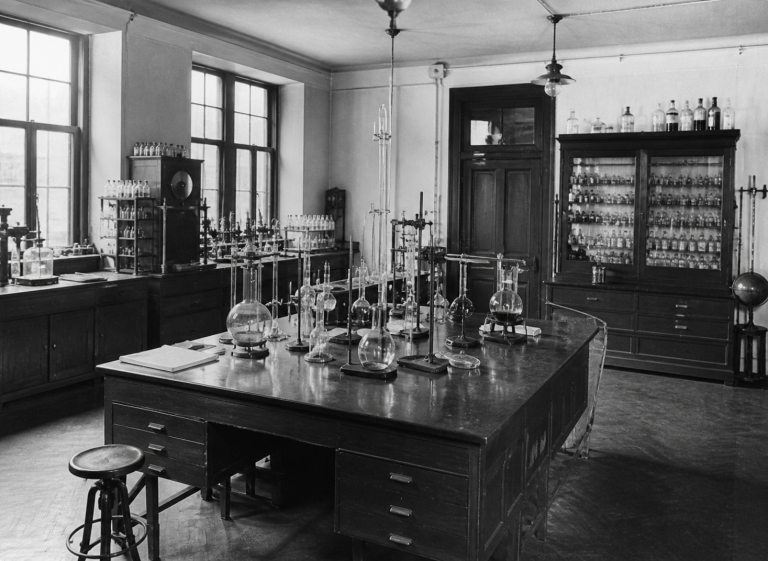
The term laboratory originally comes from the Latin laborare (to work). So actually “only” a “place of work” in general. Over time, the meaning has become more and more specific, so that a laboratory was increasingly understood as a place for “scientific knowledge and processes”. In the Middle Ages, for example, a “laboratory” was understood to mean the workshops of alchemists in which they experimented. In the course of the development of chemistry in the 17th-19th centuries, the laboratory became a place for systematic experiments. These experiments used utensils such as test tubes and pipettes, which many people associate with laboratories.

Today, a laboratory is understood to be a specialized place for analytical work and experiments according to clear rules such as ISO or GMP. As a rule, laboratories carry out analytical procedures, tests or measurements. However, depending on the type of laboratory, the focus can also be on experiments and trials (as in research laboratories) or the production of solutions and substances in small quantities in a laboratory environment (e.g. manufacturing laboratory). The infrastructure includes not only modern laboratory furniture, but also a good IT infrastructure
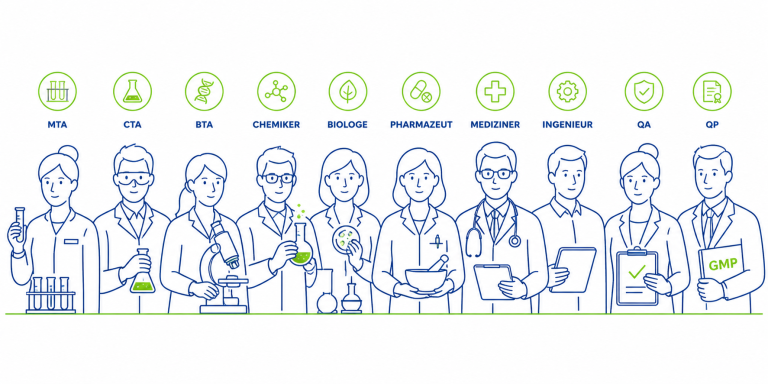
People with a scientific knowledge base work in laboratories. For example, laboratory technicians (e.g. with training as medical-technical assistants (MTA), chemical-technical assistants (CTA) or biological-technical assistants (BTA)) and academics (Diploma, B.Sc., M.Sc., PhD, Dr.) from various disciplines such as chemists, biologists, pharmacists, physicians and engineers. In addition, quality managers and quality assurance (QA) staff play a central role in ensuring compliance with norms, standards and regulatory requirements.
TYPOLOGY OF LABORATORIES
Every laboratory is different and individual in its own way – characterized by the type of analysis, the people, the industry, the regulation and the form of organization. At the same time, despite this diversity, recurring patterns can be recognized, so that each laboratory can be assigned to a specific type of laboratory.
Typologies are used in many disciplines to structure complex and heterogeneous realities. They make it possible to recognize similarities and systematically describe differences and gain insights from them.
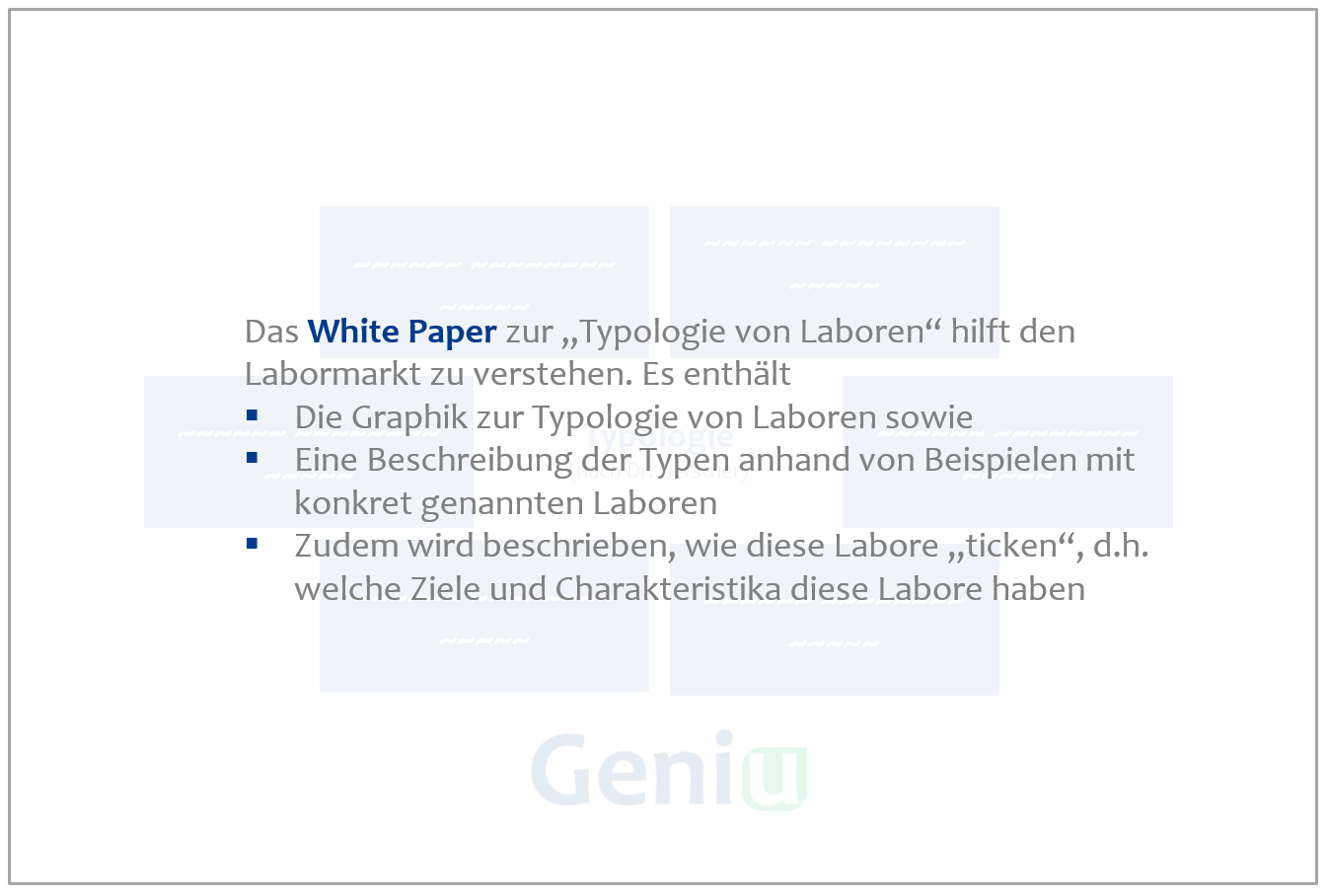
The “Typology of Laboratories” presented in the white paper was developed by Dr. Gerstner, one of the leading experts for laboratory optimization in Europe and one of the pioneers of lean management in the laboratory. It creates a structured basis for better understanding laboratories and can be used to describe the basic type of laboratory.
TYPES OF LABORATORIES
Laboratories according to their position in the value creation process
Laboratories can be categorized according to their role in the value creation process (see Michael E. Porter). Laboratories can then be divided into research and development laboratories, production or manufacturing laboratories and quality control laboratories.

Research laboratories carry out experiments and tests to generate new knowledge. This takes place either in the field of basic research, e.g. in a university environment, or in industrial research, e.g. in the pharmaceutical industry to identify new active ingredients or technologies. Examples include laboratories at the Julich Research Center.
carry out experiments and tests to generate new knowledge. This is done either in the field of basic research, e.g. in a university environment, or in industrial research, e.g. in the pharmaceutical industry to identify new active ingredients or technologies. Examples include laboratories at the Julich Research Center.
Development laboratories transfer scientific findings into concrete applications, products or processes. They optimize formulations, scale up processes from laboratory scale to pilot scale and test technical feasibility under realistic conditions. Typical examples include the development of new drug formulations in the pharmaceutical industry, such as at Pfizer, Sanofi or Bayer, the adaptation of formulations in the food industry or the development of new materials and coatings in chemical and materials technology.
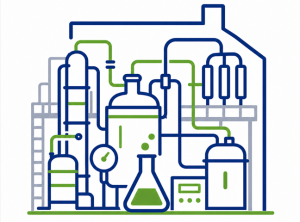
Production or manufacturing laboratories are directly involved in value creation and manufacture products or intermediate products under controlled conditions – often on a small to medium scale (e.g. small scale or pilot production). They are used to produce clinical test samples, personalized therapies or highly specialized products. Examples include biotechnology laboratories for the production of cell cultures or proteins, clean room laboratories for the production of sterile drugs or laboratories for the small-scale production of specialty chemicals.
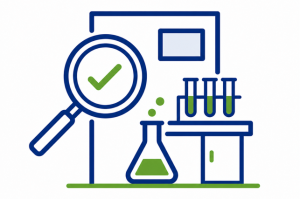
Quality control laboratoriesalso known as QC laboratories or routine laboratories, check the quality of raw materials, intermediate products and finished products. This is done both through in-process controls (IPCs) and through final inspections of the finished goods. They ensure that all products comply with regulatory requirements and specifications. Virtually every company in the pharmaceutical, chemical or food industry has its own quality control laboratory, often supplemented by standardized test methods, a high degree of automation and a strong focus on efficiency and reproducibility.
Laboratories by reference to the client
Laboratories can also be differentiated according to who they provide their services for. A distinction is made between company laboratories and contract laboratories.
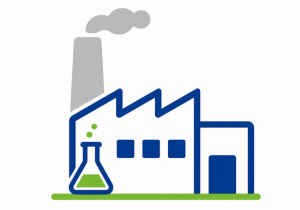
Company laboratoriesalso known as in-house laboratories, are organizationally integrated directly into a company and provide their analytical services exclusively or predominantly for their own operations. The “client” is therefore an internal customer. As a rule, the focus of company laboratories is on quality control for production, but sometimes also on (applied) research. Examples of this are the company laboratory of the chemical company Evonik or laboratories at large food manufacturers.

Contract laboratoriesalso known as external laboratories, provide laboratory services for various customers and industries. The “client” is therefore an external customer. Companies specifically outsource analyses, tests or development services, e.g. if special expertise is required or if it is not worthwhile carrying out analytical methods internally due to a small number of samples. Examples of contract laboratories are Eurofins Scientific, Amedes, SGS and Intertek.
Laboratories according to the type of facility
Laboratories can also be differentiated according to the institutional context in which they are operated. A distinction is made between public or non-profit institutions and private or profit-oriented institutions.

Public or Non-profit laboratories. These can be research laboratories of public institutions that are part of universities, state research organizations or non-profit foundations, or they can be stately laboratories, e.g. of cities or countries. The focus of university laboratories is often on basic research, teaching (in “teaching laboratories”) and application-oriented research in the public interest. They are mainly financed by state funds, funding programs or foundations. Typical tasks are scientific studies, method development and training of specialists and (prospective) scientists such as doctoral students, post-docs and professors. Examples include laboratories of the Max Planck Society (in Germany), university laboratories such as at Harvard University (in the USA, Boston) or Tsinghua University (in China, Beijing).

The focus of government laboratories often lies in the performance of sovereign monitoring and control tasks. These include, for example, groundwater and wastewater analysis, food monitoring, environmental monitoring or health-related investigations on behalf of the public sector. These laboratories work on the basis of legal requirements and standardized procedures and are often closely integrated into official structures. Typical examples are municipal water laboratories, state investigation offices or institutions such as the Federal Environment Agency in Germany, the Food and Drug Administration (FDA) in the USA or corresponding government laboratories at federal/provincial or state level in other countries. They make a key contribution to the protection of health, the environment and consumer interests.
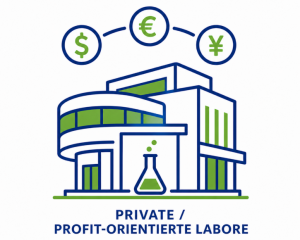
Private or profit-oriented laboratoriesare also part of private companies or organized as independent laboratory service providers. Their aim is to create economic added value, e.g. by researching new products and ensuring product quality through quality control. Examples include research and development laboratories of large companies such as BASF or Pfizer as well as private contract laboratories and testing service providers such as Eurofins Scientific or WuXi AppTec (Shanghai, China).
Laboratories by type of industry
Laboratories can also be differentiated according to the sector or industry in which they operate. Typical industries are: Pharmaceuticals, chemicals, biotechnology, medical technology, food, agriculture, medicine/hospital, forensics, environmental analysis, water and automotive. These industries can be divided into life science laboratories and non-life science laboratories:

Life science laboratories include all laboratories that deal with biological, medical or food-related issues. They frequently work with living organisms, cells, biomolecules or health-related samples and are often subject to strict regulatory requirements (e.g. GMP, GLP). Typical representatives are laboratories from the pharmaceutical, biotechnology, medical technology, food and agricultural sectors, as well as medical and clinical laboratories in the hospital environment. Examples include research and development laboratories at Roche (Switzerland), biotechnology laboratories at BioNTech (Germany) and clinical diagnostics laboratories such as Labcorp (USA).
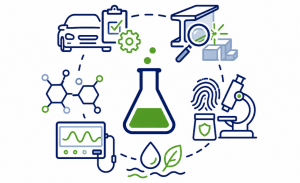
Non-life science laboratories are primarily concerned with physical, chemical or technical issues outside of biological systems. They analyze materials, test technical properties or investigate environmental parameters. Typical industries are automotive, forensics and environmental analysis. Examples include materials and testing laboratories at BMW, forensic laboratories of government agencies, environmental laboratories such as the United States Environmental Protection Agency or water analysis laboratories of municipal utilities.
Laboratories according to the type of analysis
Laboratories can also be differentiated according to the analytical methods used. A common classification includes wet chemistry, microbiology and instrumental analysis.
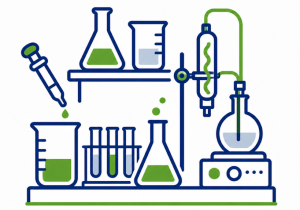
Wet chemistry laboratoriesalso known as classical chemical analysis or “wet chemistry“, are based on chemical reactions in solution. They are often used for basic quantifying and qualitative analyses. Typical applications are titrations, gravimetry or photometric determinations. Examples of frequently used methods are acid-base titrations, redox titrations and spectroscopic methods such as UV/Vis photometry.
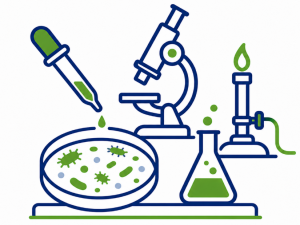
Microbiology laboratoriesalso known as bioanalytics , examine microorganisms such as bacteria, viruses, fungi and yeasts. They play a central role in food analysis, the pharmaceutical industry, medicine and environmental monitoring. Typical tasks include the detection, identification and quantification of microorganisms as well as testing for sterility or contamination. Examples of common methods are microbial counts (e.g. colony counting) and PCR-based detection methods.
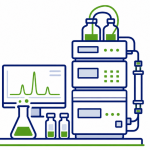
Instrumental analysisInstrumental analysis, also known as device analysis, uses specialized measuring devices for the high-precision and often automated analysis of substances. The methods work with high sensitivity and selectivity and are standard in many industries. Typical applications are the identification and quantification of substances, trace analysis or structure elucidation. Examples of frequently used methods are chromatography methods such as HPLC (High Performance Liquid Chromatography) and GC (Gas Chromatography), spectroscopic methods such as AAS (Atomic Absorption Spectrometry) and ICP (Inductively Coupled Plasma), as well as modern molecular biology methods such as NGS (Next Generation Sequencing).
Laboratories according to biological protection levels
Laboratories can also be classified according to biological protection levels. This classification describes which safety measures are required when handling biological agents. The classification into S1 to S4 laboratories (also known as biosafety levels, BSL-1 to BSL-4 ) is based on international guidelines, e.g. from the World Health Organization.
S1 laboratoriesalso known as BSL-1, work with substances that pose no or only a very low risk to people and the environment. Normal hygiene measures are sufficient. Typical applications are training and teaching laboratories or simple microbiological work with non-pathogenic microorganisms, e.g. standard tests with non-hazardous bacterial strains.
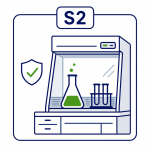
S2 laboratoriesalso known as BSL-2, deal with biological agents that can pose a moderate risk and can cause illness in humans, but are generally easy to treat. Additional safety measures are required here, such as safety cabinets and controlled access. Typical applications are diagnostic laboratories that examine patient samples or microbiological work with known pathogens such as certain bacteria or viruses.
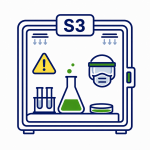
S3 laboratoriesalso known as BSL-3, work with pathogens that can cause serious illnesses and are transmissible via the air. The safety requirements are correspondingly high, e.g. negative pressure rooms, special protective clothing and strict access controls. Such laboratories are used, for example, for research into highly infectious pathogens or for special diagnostic issues, such as emerging infectious diseases.
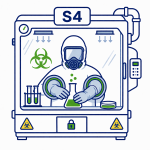
S4 laboratories, also known as BSL-4, represent the highest safety level and are intended for work with highly dangerous and often life-threatening pathogens for which there are often no effective therapies or vaccines. These laboratories have maximum safety precautions, such as full protective suits with their own air supply and completely sealed-off work areas. Typical applications include research into rare, highly pathogenic viruses and the investigation of particularly dangerous biological risks.
SIGNIFICANCE OF TYPOLOGY FOR PRACTICE AND RESEARCH
The systematic classification of laboratories along different dimensions creates a common language and a structured understanding of an otherwise very heterogeneous landscape. It is therefore highly relevant for both practice and research.

For practitioners
Marketing managersuse the typology to segment the laboratory market and develop tailor-made offers for the different target groups. A differentiated understanding of laboratories makes it possible to target marketing and sales activities to specific laboratory types and better address their respective needs.
For consultants of laboratories, the typology can be helpful for various issues. For example, as a basis for strategic analysis of the laboratory market. Or for every project with a laboratory, in order to understand as quickly as possible what makes a laboratory tick. In addition to consulting experience, this forms an important basis for successful consulting.
Investors in laboratories, but also investors in laboratory real estate, the typology helps to segment the laboratory market in order to identify the most attractive laboratories, among other things.

For research
The typology provides a classification logic for systematically analyzing and researching the development of the laboratory landscape. It helps researchers to identify trends and structural changes – for example, the shift in activities towards contract laboratories or different consolidation trends.
The first scientific work on the application of lean management in the laboratory by Thomas C. Trible from 2005 also classified laboratories in a similar way – only in a simpler or incomplete manner.

For Geniu
Geniu specializes in laboratories and provides consulting and training for laboratories, but also supports laboratory equipment manufacturers and laboratory service providers whose customers are laboratories, as well as organizations that invest in or work with laboratories. From basic training to understand laboratories to creating case studies for your products, quantifying the added value for the customer on different dimensions.
Geniu advises the various laboratories listed in the typology. From pharmaceutical laboratories to contract laboratories and “special laboratories”.
INTERVIEW WITH DR. GERSTNER ON TYPOLOGY

Dr. Gerstner is one of the leading experts for laboratory optimization and lean labs in Europe. He has successfully implemented over 200 laboratory optimization projects in Europe, the USA and Asia – in a wide variety of laboratory types. He is considered one of the leading experts for lean management in laboratories in Europe.
GeniuDr. Gerstner, how did you come to be so intensively involved in the classification of laboratories?
Gerstner: We work with laboratories on a daily basis. And when we receive an inquiry from laboratories, the first thing we do is to understand what kind of laboratory it is.
Geniu: Why is it so difficult to classify a laboratory correctly at first glance?
Gerstner: Imagine you meet someone at a birthday party who tells you: “I work in a laboratory”. What then goes through your mind? Most people immediately have an image – test tubes, pipettes, maybe white coats. But in reality, it could be anything: a medical diagnostics laboratory, a quality control laboratory in the food industry or a research laboratory.
Geniu: Does that mean the term “laboratory” is too unspecific?
Gerstner: Exactly. Every laboratory is different and individual in its own way. At the same time, however, we sometimes see recurring patterns in practice. And it is precisely these patterns that make it possible to classify laboratories into types.
Geniu: What is this helpful for?
Gerstner: For many groups. For example, for manufacturers of laboratory equipment or service providers for laboratories. If you want to understand the many different laboratories and, for example, align marketing and sales accordingly, you need a clear structure. A typology helps to make this diversity tangible, to understand differences and to segment them in a targeted manner.
Geniu: And for employees in laboratories themselves? They don’t really need something like that, do they?
Gerstner: I absolutely agree with you. An employee in a laboratory already knows her laboratory. Then she doesn’t really need this. But it can be extremely helpful for applicants and job seekers. Because the different types of laboratories work very differently, so the nature of the work is very different. A contract laboratory for environmental analysis, for example, ticks very differently from a university research laboratory specializing in genetics or a company laboratory in a large chemical plant for plastics production.
GeniuAnd how does the typology help you in your work as a consultant?
Gerstner: Here too, a typology provides orientation. It helps to understand how a laboratory works, which goals and challenges are typical and how solutions must be designed so that they really fit. A clear understanding of the type of laboratory allows us to proceed very efficiently in consulting and to understand the specific features of the laboratory in a targeted manner. This allows us to get to the actual core of the problem in a much shorter time.
Geniu: How did your typology come about?
Gerstner: Over the last 20 years, I have analyzed a wide variety of laboratories and supported them in numerous projects. Based on this understanding, I have structured the recurring patterns that now form the basis of the typology. The first typology was created back in 2016.